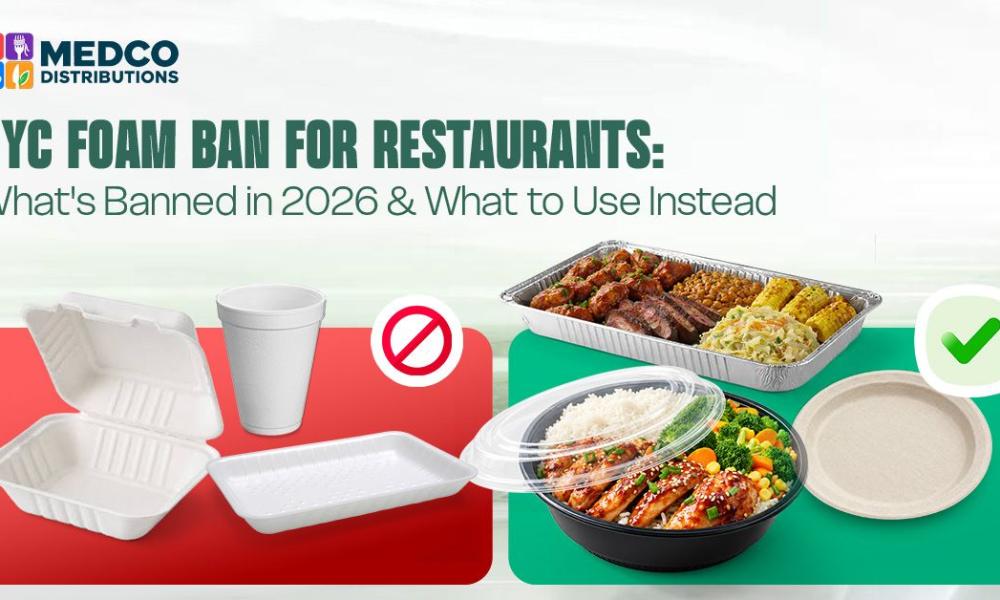
NYC Foam Ban for Restaurants: What's Banned in 2026 and What to Use Instead
If you run a restaurant, deli, or food cart in New York City, you've probably already had this conversation with a supplier, a health inspector, or a nervous new hire who grabbed the wrong cups by mistake. Foam containers have been off-limits in the five boroughs for years now, yet the confusion hasn't really gone away. Part of that is because the rules have kept evolving, most recently with a New York State expansion that took effect at the start of this year.
So here's a straightforward rundown of what's actually banned, who it applies to, what happens if you get caught using foam anyway, and what you're supposed to be using instead.
A Quick Timeline of How We Got Here
New York City's styrofoam ban didn't happen overnight, and understanding the backstory actually helps explain why some of the details still trip people up.
The City Council first passed the law allowing a ban back in 2013, but it got tied up in litigation for years after Dart Container Corporation, the country's largest manufacturer of foam cups, sued to block it. A judge initially sided with Dart, ruling the city hadn't adequately proven foam couldn't be recycled economically. The city went back, did more analysis, and eventually won.
The ban finally took effect on January 1, 2019, with a six month grace period before any fines were issued. Then in 2022, New York State passed its own statewide version of the ban, extending similar rules to businesses outside the five boroughs. Most recently, as of January 1, 2026, the state expanded that law further to cover polystyrene foam containers used specifically for cold storage, think coolers and ice chests, closing a gap that previously let those items slide through, according to the New York State Department of Environmental Conservation.
If you're operating in NYC specifically, the city's original 2019 ban remains the primary law you need to follow, since the state law specifically carved out an exemption for cities that already had their own foam rules in place.
What's Actually Banned
According to the NYC Department of Sanitation's official guidance, restaurants, delis, and mobile food vendors in New York City cannot offer, sell, or even possess single-use expanded polystyrene (EPS) foam items, including:
- Clamshell takeout containers
- Cups
- Plates
- Bowls
- Trays
- Coolers
Manufacturers and distributors also can't sell loose fill foam packaging, the material most people just call packing peanuts, anywhere in the city.
One thing worth clarifying since it comes up constantly: "Styrofoam" is technically a trademarked brand name belonging to Dow Chemical for a specific type of extruded polystyrene foam, but it's become the generic term most New Yorkers use for any foam product. The law itself targets expanded polystyrene foam broadly, not just the Dow-branded material, so don't assume you're in the clear just because your supplier doesn't use the word "Styrofoam" on the box.
What's Exempt From the Ban
Not everything made of foam is off-limits. The NYC311 foam ban page lists a few specific carve-outs:
Pre-packaged, sealed food items. If a product arrives already packaged and sealed in foam before it reaches your establishment, like something shipped in from outside the city, that's generally allowed. The ban targets what restaurants distribute to customers, not every piece of foam that ever enters the building.
Raw meat, poultry, and seafood trays. Foam trays used specifically to store raw meat, pork, fish, seafood, or poultry sold from a butcher case are exempt. This one trips up a lot of grocery stores and delis that assume the whole ban applies uniformly.
Shipping and protective packaging. Foam blocks used purely for protective packaging during shipping and receiving aren't covered.
Small business hardship waivers. This is the one that matters most for smaller operators. Businesses and nonprofits earning less than $500,000 in gross annual income can apply for a temporary hardship exemption through the city's Department of Small Business Services if they can demonstrate that switching to non-foam alternatives would create genuine financial hardship. It's not automatic though. You have to apply and prove it.
What Happens If You Get Caught Using Foam Anyway
This is where it's worth being precise, because the exact fine amounts reported in older news coverage from 2019 don't quite match what the city's current official page lists. According to NYC's own DSNY business guidance page, violations carry escalating fines within a 12 month period, starting lower for a first offense and increasing for repeat violations. Because enforcement penalty schedules can be adjusted administratively over time, your safest move is always to check the current fine structure directly on the DSNY site before assuming a specific dollar figure, rather than relying on a number from an older article (including, frankly, ones written back when the ban first launched).
What's consistent across every source: fines increase for repeat violations, enforcement is handled through the Environmental Control Board, and multiple city agencies, including the Department of Sanitation and the Department of Health and Mental Hygiene, have authority to issue citations.
Why This Matters Beyond Just Avoiding a Fine
It's easy to treat this purely as a compliance checkbox, but there's a practical operational reason the ban exists in the first place. Expanded polystyrene foam genuinely isn't recyclable in any economically viable way through the city's curbside program. It's lightweight, it breaks apart into small pieces that contaminate other recyclables, and processors simply won't take it. DSNY's own determination, which formed the legal basis for the ban, concluded there was no functioning market for post-consumer EPS foam.
Practically speaking, that means every foam cup or clamshell your restaurant used to send out the door was heading straight to a landfill regardless of what bin a well-meaning customer put it in. Switching to genuinely recyclable or compostable alternatives actually changes that outcome, assuming the material gets sorted correctly on the other end.
What NYC Restaurants Should Use Instead
Once a kitchen makes the switch away from foam, the replacement usually falls into one of a few categories, each with different tradeoffs.
|
Alternative |
Best For |
Tradeoff to Know |
|
Heavy-weight plastic containers (PP) |
Hot food, reheating, deli items |
Not compostable, but durable and microwave safe |
|
Aluminum foil containers |
Catering trays, baked and roasted dishes |
Not insulated like foam, can be sharp-edged if damaged |
|
Bagasse (sugarcane fiber) containers |
Hot food, eco-conscious branding |
Usually needs commercial composting access to break down properly |
|
Coated paper containers |
Cold or room-temp items, cups |
Some coatings affect recyclability depending on local facility rules |
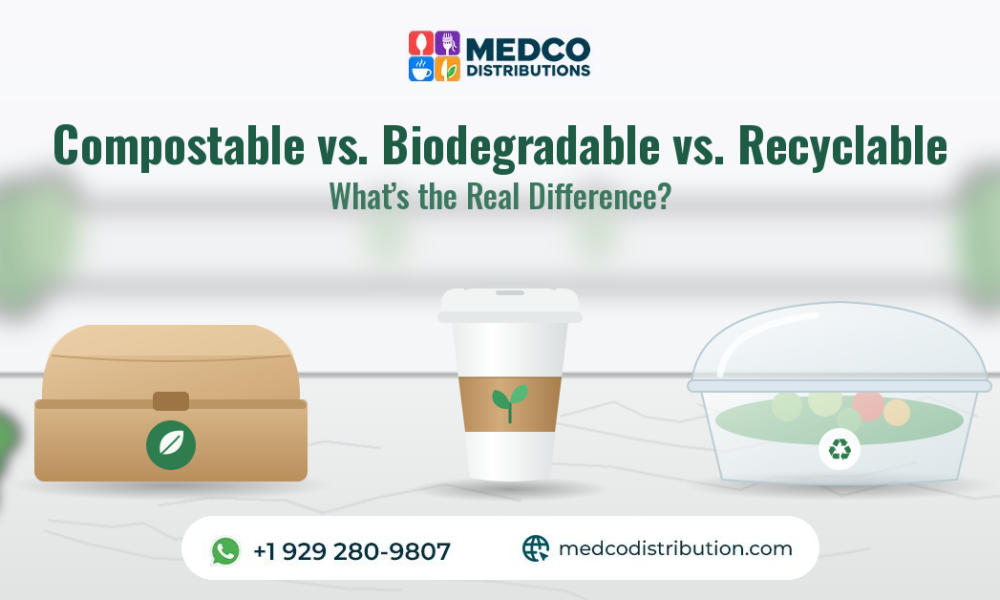
A lot of NYC restaurants end up using a mix rather than one single replacement, heavier plastic or bagasse containers for hot entrees that need to hold up during delivery, and paper-based options for cold items or lower-risk food. Medco's microwavable disposable food container line covers the plastic side of that equation, while the paper plate, bowl, and compostable tableware category covers bagasse-based options for operators who want a more sustainable positioning.
For catering-heavy operations specifically, foam coolers used to be a common choice for cold transport. Since those are now also restricted under the newer state cold-storage expansion, it's worth reviewing whether any older foam cooler stock still sitting in a storage room needs to be phased out, even if it was purchased before the rule changed.
A Note for Businesses Outside NYC But Still in New York State
If you're reading this from Buffalo, Albany, or anywhere else in New York State outside the five boroughs, the rules are similar but technically governed by the separate 2022 state law rather than the city's 2013 local law. The practical effect is close to identical: foam food containers and packing peanuts are banned, with comparable hardship waiver provisions, and as of January 1, 2026, the state-level ban now also covers foam containers designed for cold storage use. The NYS DEC's Go Foam Free page is the right place to check current statewide specifics if your business operates both inside and outside the city.
Common Questions About the Foam Ban
Is it just Styrofoam cups that are banned, or all foam products?
All single-use expanded polystyrene foam food service items are covered, not just cups. That includes plates, bowls, trays, clamshell containers, coolers, and loose-fill packing peanuts sold separately.
Can my restaurant still use foam if we're a very small operation?
Possibly, through a hardship waiver, but it isn't automatic. Businesses with annual gross income under $500,000 can apply through the Department of Small Business Services and must show that switching to alternatives would cause genuine financial hardship.
Does the ban apply to foam used for raw meat or seafood packaging?
No. Foam trays specifically used to package raw meat, poultry, or seafood sold from a butcher case remain exempt under the current rules.
What's the difference between the NYC ban and the New York State ban?
NYC's ban has been in effect since 2019 under city Local Law 142. The state passed its own, separate ban in 2022 for businesses outside NYC, and expanded it again in January 2026 to include foam used for cold storage. NYC is specifically exempted from the state law because its own local rules already apply.
Where can I get official, current information instead of relying on older articles?
Check the NYC Department of Sanitation's foam containers page directly, since fine amounts and specific provisions can be updated administratively over time.
Getting Your Packaging Compliant
If your restaurant is still working through older foam inventory or trying to figure out the right replacement for your specific menu, it helps to think about it item by item rather than switching everything to one material. Hot entrees, cold sides, catering trays, and to-go cups often call for different solutions.
Medco carries compliant alternatives across microwavable containers, compostable paper and bagasse tableware, and other tabletop disposables if you're looking to sort out a full replacement order. If you've got questions specific to your setup, our FAQ page is a good starting point, or reach out directly.