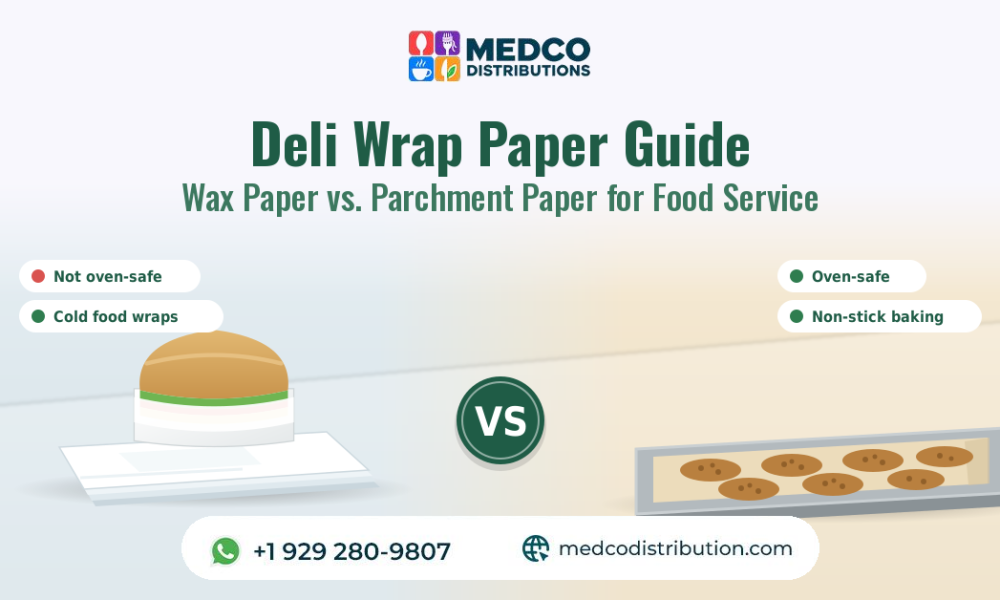
Deli Wrap Paper Guide: Wax Paper vs. Parchment Paper for Food Service
Picture a busy deli on a Saturday morning. The sandwich line is long, the slicer is humming, and a new hire has been told to line a sheet pan for the bakery case. He reaches for the paper on the shelf, the one that looks right, and slides the pan into the oven.
Ten minutes later, the kitchen smells like burning candles. A thin trail of smoke curls up from the oven door. The paper he grabbed was wax paper. The roll he should have grabbed was parchment.
This happens in real kitchens all the time. Wax paper and parchment paper sit side by side, they look nearly the same, and they feel similar in the hand. But they are built for different jobs, and mixing them up can ruin food or even start a fire.
This guide breaks down wax paper vs parchment paper for food service. You will learn how each one is made, where each one shines, how deli wrap paper fits in, and how to choose the right sheet for your menu. Grab a coffee. It is a quick read, and it might save your next Saturday rush.
The Short Answer
Wax paper is paper coated with wax. It resists moisture and grease and costs less, but it cannot take oven heat.
Parchment paper is paper coated with silicone. It resists heat and sticking, so it works in ovens, though it usually costs more.
For wrapping sandwiches, interleaving deli meats and lining baskets, wax paper is the classic choice. For baking and roasting, parchment wins. That single rule covers most food service decisions.
What Is Wax Paper?
Wax paper is thin paper that has been coated with food-grade wax, usually paraffin or soy wax. The wax gives it a smooth, slick surface that repels water and keeps food from sticking.
The weakness is heat. Paraffin melts at a low temperature, around 115 to 154°F according to a Safeway shopping guide on wax paper and parchment. That is far below normal oven temperatures. In a hot oven, the coating can melt, smoke and catch fire.
Dry wax vs. wet wax
There is one detail many buyers miss. Not all wax paper is made the same way.
- Wet wax paper has wax coated on the surface. It leaves a waxy residue behind and may pass a wax flavor to food.
- Dry wax paper has wax embedded in the sheet, so it leaves no residue on surfaces. It is the better fit for foods.
The industrial supplier McMaster-Carr explains this difference on its patty paper page. Most deli sheets sold for food service are dry wax paper, but it never hurts to confirm that on the spec sheet.
What Is Parchment Paper?
Parchment paper is made from wood pulp or cotton fiber and then treated with silicone. The silicone makes the surface non-stick and able to handle heat.
Most brands rate parchment for oven use up to about 425 to 450°F. An EatingWell guide, republished by AOL, notes that past that range it can turn brittle or burn. Always check the rating on your own box, since brands vary.
Parchment comes as rolls and as pre-cut sheets, and it can be bright white or natural brown. It is the paper of choice for lining sheet pans, wrapping fish for baking and keeping cookies from sticking.
Wax Paper vs. Parchment Paper: Side by Side
|
Feature |
Wax paper |
Parchment paper |
|---|---|---|
|
Coating |
Paraffin or soy wax |
Silicone |
|
Oven safe |
No |
Yes, within the rated temperature |
|
Moisture and grease resistance |
Good |
Good |
|
Non-stick |
Yes, at room and cold temperatures |
Yes, including in the oven |
|
Typical cost |
Lower |
Higher |
|
Best for |
Wrapping, interleaving, cold prep, liners |
Baking, roasting, hot prep |
|
Common formats |
Interfolded sheets, flat sheets, rolls |
Rolls, pre-cut sheets |
A Whirlpool kitchen guide and a Food Network explainer both land on the same main point. Only parchment is heat resistant.
Why Wax Paper Is the Deli Standard
Walk into almost any deli and you will see wax paper on the counter. There is a good reason for that.
It handles grease and moisture. Cold cuts, cheeses and sandwich fillings can be oily or wet. Dry waxed sheets keep that from soaking through to the customer’s hands.
It can breathe. Some manufacturers describe dry waxed deli wrap as breathable, which helps prevent sandwiches from turning soggy. You can see this in the product notes for a Marcal deli wrap listing.
It is fast. Interfolded sheets pop up one at a time from the box. A staff member can grab a sheet with one hand while the other holds the sandwich. In a lunch rush, those seconds add up.
It is cheap. Deli sheets are often priced around a penny or two per sheet in 6,000-sheet cases. That makes them easy to use freely without worrying about waste.
It is versatile. Counter staff use the same sheets to grab pastries, line baskets, separate sliced meats and wrap burgers.
Deli Sheet Sizes and Weights
Deli wrap comes in a few common formats. Picking the right one cuts waste.
- Interfolded sheets. These sit folded into each other in a dispenser box. Common sizes include 6″, 8″, 10″ and 12″ by 10 3/4″.
- Flat sheets. These are stacked and come in larger sizes such as 15″ by 15″, which suit bigger sandwiches and subs.
- Rolls. These let you tear off as much as you need, which suits irregular items.
Weight matters too. Light weight sheets suit simple wraps and liners. Medium weight is the all-purpose choice for sandwiches. Heavy weight holds up to juicier fillings and rougher handling.
A good rule is to pick the smallest sheet that still wraps the food comfortably. Oversized paper looks sloppy and wastes money.
When Parchment Paper Is the Better Choice
Parchment earns its higher price in several places.
- Baking. Sheet pans, cake pans and cookie trays release cleanly when lined with parchment.
- Roasting and hot prep. If food is going into an oven, or coming out of one, parchment is safer.
- Cooking in the paper. Fish and vegetables baked in parchment packets stay moist and easy to serve.
- Hot serving. For items straight off a hot surface, a heat-rated paper is the more reliable pick.
The rule is simple. If the application involves real heat, use parchment or another heat-rated wrap. If it is cold or room-temperature prep, wax paper is usually enough and costs less.
Which Paper Fits Your Business?
Delis and sandwich shops. Wax paper is the daily workhorse for wrapping sandwiches, separating slices and lining baskets. Keep a small supply of parchment for the oven side of the menu.
Bakeries and cafes. Parchment lines the baking trays. Wax sheets help staff pick up pastries and cookies for customers without touching them.
Pizzerias and burger spots. Wax paper sheets are a common liner and wrapper for sandwiches and burgers. Hot items go on heat-rated paper.
Food trucks and concession stands. Space is tight, so one box of interfolded wax sheets and one roll of parchment cover most needs.
Meat counters and supermarkets. Sheets keep patties, cutlets and sliced meats from sticking to each other. Pair them with a pink absorbent meat pad when juices are a concern.
Candy and chocolate shops. Wax paper is a favorite for cooling dipped sweets and separating layers in a box.
Caterers. Both papers are useful. Wax sheets cover cold platters and sandwiches, while parchment handles hot trays and baked items.
How to Choose: A Quick Checklist
Ask yourself these questions before you order.
- Will it go in an oven or touch a very hot surface? If yes, choose parchment.
- Is it for wrapping or serving cold or room-temperature food? Wax paper is usually the right fit.
- How greasy or wet is the food? Greasy fillings call for a heavier weight.
- How fast does your team need to work? Interfolded sheets win on speed.
- How big is the food? Match the sheet size to the largest item you wrap.
- What is your volume? High-volume shops should buy by the case to lower the cost per sheet.
If you answered “yes” to number one for some items and “no” for others, stock both and label them clearly.
Cost: What You Really Pay
Wax paper is the budget option. A case of deli sheets can last a busy shop weeks, and the cost per wrap is tiny.
Parchment costs more per sheet, because the silicone treatment and heat performance add to production cost. That is fine. You only use it where you need it.
The smart move is not to choose one over the other. It is to use each where it works best. Parchment for the oven, wax for the counter. That keeps quality high and spending low.
Safety, Storage and Handling
A few habits keep your paper working well and your staff safe.
- Store the papers apart. Keep oven-safe parchment and wax paper on separate shelves with clear labels. This is the best way to prevent the Saturday morning mix-up.
- Keep paper dry and clean. Store boxes off the floor and away from steam, spills and strong smells.
- Train new hires. A two-minute lesson on “parchment goes in the oven, wax paper never does” prevents most problems.
- Use gloves. Staff who handle ready-to-eat food and paper wraps should wear disposable gloves for good hygiene.
- Ask for a food-contact statement. Your supplier should be able to confirm the paper is intended for food contact.
- Do not reuse. Used wraps carry grease and bacteria. Treat them as single-use.
A Word on Disposal
Wax coatings and silicone coatings both affect how paper is handled after use. Some dry wax deli sheets are listed as non-recyclable, and not all silicone-coated parchment is compostable. Rules differ by region, so ask your waste hauler what they accept before you promise customers anything about recycling.
Common Mistakes to Avoid
- Using wax paper in the oven. It can melt, smoke and burn.
- Buying by looks. The two papers look similar. Read the label.
- Choosing the wrong size. Too small tears and leaks. Too big wastes money.
- Going too light on weight. Juicy fillings can soak through light sheets.
- Mixing storage. Keep parchment and wax paper in separate, labeled spots.
- Ignoring the heat rating. Parchment brands differ, so check the maximum temperature on your box.
Build Your Full Packaging Setup
Deli paper is only one part of the system. Once the food is wrapped, it needs a way to leave the building. A few pairings work well for delis and takeout shops:
- Hinged take-out containers for hot meals and combo plates
- Paper bags for wrapped sandwiches and bakery items
- Food film for covering prep trays and sealing deli items
- Foil rolls and sheets for hot wraps and oven-ready dishes
- Paper trays for fries, sandwiches and quick-serve platters
Ordering these together keeps your shelves stocked and your shipping cost down.
Wax Paper at Medco Distributions
Medco Distributions supplies restaurants, delis, bakeries and grocery stores across the U.S. with disposable food packaging in bulk cases. You can browse our wax paper selection, or explore the full disposable food packaging supplies category for wraps, bags, boxes and more.
Not sure which sheet size or weight fits your menu? Contact our team and we will help you choose. Orders over $200 ship free, and orders over $1,800 get 10% off automatically. You can find more ordering details in our FAQ, and more practical guides on our blog.
Frequently Asked Questions
What is the main difference between wax paper and parchment paper?
Wax paper has a wax coating and cannot be used in the oven. Parchment paper has a silicone coating and tolerates oven heat, up to the temperature printed on the box.
Can I use wax paper in the oven?
No. The wax can melt, smoke and catch fire. Use parchment for any oven work.
Is wax paper food safe?
Wax paper made for food contact is widely used to wrap and separate food. Ask your supplier to confirm the paper is intended for food contact, and use dry wax sheets for direct food use.
What is dry wax deli paper?
It is paper with wax embedded in the sheet instead of coated on the surface. It leaves no wax residue, so it is a better fit for foods.
Can I wrap hot food in wax paper?
Warm sandwiches are common, but very hot food can soften the wax. Check the manufacturer’s guidance, and use a heat-rated paper or foil for items straight off a hot surface.
Is parchment paper better than wax paper?
Not always. It is better for heat. Wax paper is better for budget wrapping and cold prep. Most food service kitchens use both.
What size deli sheets should I buy?
Interfolded sheets in 10″ or 12″ by 10 3/4″ cover most sandwiches. Larger flat sheets, around 15″ by 15″, suit subs and big items.
Does Medco Distributions offer free shipping?
Yes. Orders over $200 ship free, and orders over $1,800 receive 10% off automatically.
Final Thoughts
The choice between wax paper and parchment paper comes down to one question. Does the food face real heat? If yes, reach for parchment. If not, wax paper does the job and keeps your costs low.
Label your shelves, train your team, and match the sheet size and weight to the food. Do that, and your wraps will look neat, your sandwiches will stay fresh, and your oven will stay smoke free.
Ready to stock up? Browse our wax paper and let us know if you need a hand picking the right size for your counter.