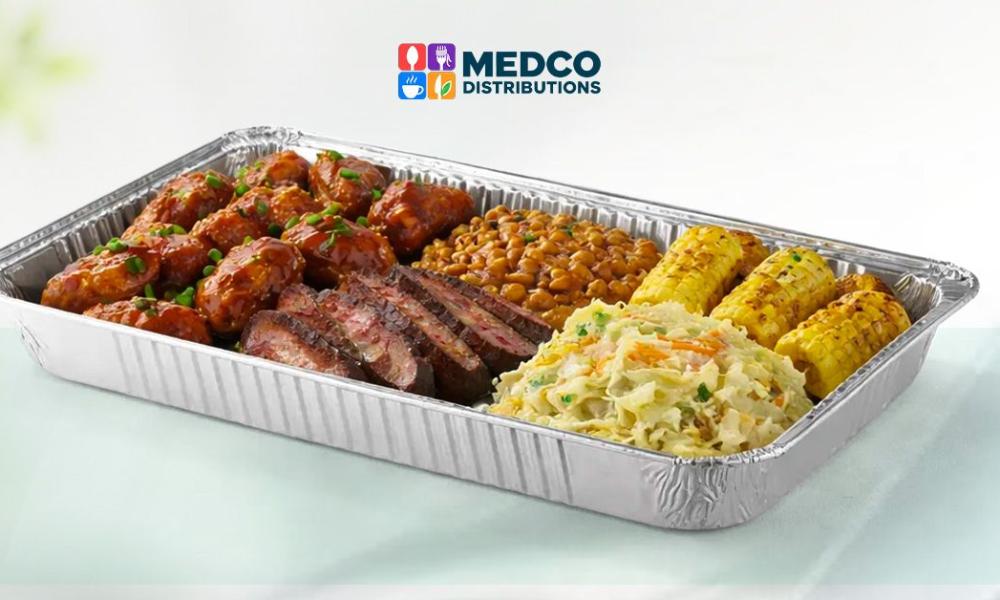
Aluminum Foil Pan Sizes Explained
Ask five line cooks what a “half pan” actually means and you'll probably get five different answers. One guy swears it's whatever fits in his hotel pan rack. Another insists it's 12x10, full stop. A catering manager down the street just orders “the medium ones” and hopes for the best.
Here's the thing: foil pan sizing isn't actually complicated once somebody walks you through it properly. It's just that most of the explanations out there are either written for engineers or buried inside a 40-page catalog nobody reads past page two. So let's fix that.
If you run a restaurant, cater events, or manage a commercial kitchen, getting your pan sizes right saves you money, reduces waste, and keeps your buffet line looking like you know what you're doing. Get it wrong and you're either paying for pans that are too big for the job or scrambling mid-rush because you ordered quarter pans when you needed halves.
This guide walks through the full lineup: full, half, third, quarter, and sixth size pans, plus the depth options and lid types that actually matter when you're placing an order.
Why Foil Pan Sizing Even Matters
It's easy to assume “a pan is a pan.” But sizing affects three things that hit your bottom line directly: food cost, labor time, and presentation.
Order pans too large and you're either overfilling them (which means more food than you need prepped) or under-filling them, which looks sloppy on a buffet line and wastes space in your steam table or delivery vehicle. Order too small and you're running back to the walk-in mid-service to refill, which nobody has time for during a dinner rush.
There's also a real food safety angle here that most buying guides skip entirely. The FDA Food Code specifically recommends using shallow pans to cool cooked food quickly and safely, because food sitting too deep in a pan takes too long to pass through the temperature danger zone. We'll get into the specifics later, but it's worth knowing upfront that pan depth isn't just a convenience question. It's a food safety one too.
The Foil Pan Sizing System, Explained Simply
Nearly every foil pan and steam table pan in North America is sized as a fraction of one base unit: the full-size pan. Once you understand that one relationship, the rest of the system falls into place pretty naturally.
A full-size pan measures roughly 12 inches by 20 inches. Every other size (half, third, quarter, sixth, and so on) is a mathematical slice of that same footprint. Two half pans fit exactly where one full pan would go. Four quarter pans fill that same space. It's a modular system, which is honestly one of the smarter standardizations the foodservice industry ever agreed on.
Here's how the common sizes break down:
|
Pan Size |
Approximate Dimensions |
How Many Fit a Full-Size Well |
Typical Use |
|
Full Size (1/1) |
12" x 20" |
1 |
Large entrees, bulk sides, roasting pans |
|
Half Size (1/2) |
12" x 10" |
2 |
Sides, smaller entrees, buffet stations |
|
Third Size (1/3) |
12" x 6⅔" |
3 |
Sauces, condiments, sandwich toppings |
|
Quarter Size (1/4) |
6" x 10" |
4 |
Garnishes, prep rails, smaller portions |
|
Sixth Size (1/6) |
6" x 6⅔" |
6 |
Dressings, pickles, portion-controlled items |
A quick note on that “approximate” wording: you'll see slightly different numbers depending on the source, sometimes 20¾" instead of an even 20". That's because pans measure a little differently depending on whether you're going rim-to-rim or counting the recessed interior. Don't stress over a quarter inch here or there. What matters is that the fractional math stays consistent across brands and suppliers.
Pan Depth: The Part Everyone Forgets to Think About
Length and width get all the attention, but depth is where a lot of ordering mistakes actually happen.
Shallow Foil Pans
Shallow pans, usually around 2 to 2.5 inches, are your workhorses for roasted vegetables, sheet-style bakes, and anything where you want fast, even heating. They're also the go-to choice when you're cooling food down after cooking, since a thinner layer of food drops through the danger zone faster than a deep one.
Standard-Depth Foil Pans
Standard depth, typically 4 inches, handles most general kitchen prep. If you're not sure what depth to order, this is usually the safe default.
Deep Foil Pans
Deep pans, 6 inches and up, are built for volume: chili, mashed potatoes, soups, anything you're making in bulk and need to hold for a long service window. Just know that deep pans heat and cool unevenly, hot in the middle, slower at the edges, so they're not always the right call for food safety-sensitive applications.
If you want the official word on cooling depth, the FDA Food Code lays it out directly: cooked food needs to cool from 135°F to 70°F within two hours, then down to 41°F within another four. Shallow pans (generally 2 inches or less) are one of the Code's recommended methods for hitting that window reliably. It's not a suggestion you can shrug off either, since this is one of the most commonly cited violations during health inspections.
Half Pan vs. Full Pan: Which Should You Actually Order?
This is probably the most common question we hear, so let's answer it plainly.
When to Choose a Full-Size Pan
Full-size pans make sense when you're cooking or serving large volumes of a single item, think a big catering order of lasagna or a buffet line's main entree. They're efficient for bulk prep because you're not managing multiple smaller containers.
When to Choose a Half-Size Pan
Half pans are the more versatile everyday choice for most restaurants. They fit better on smaller steam tables, they're easier for one person to carry safely, and they let you offer more menu variety on a buffet line without needing a commercial-sized steam table to fit everything.
Honestly, if you're a mid-sized restaurant or caterer trying to decide where to start, half pans are usually the better default. You can always combine two to effectively create a full pan's worth of space, but you can't un-split a full pan when you only need half the capacity.
Choosing the Right Foil Pan Lid
Here's something that trips people up: not every foil pan lid is interchangeable, and the lid you choose actually affects how the food performs.
Foil Board Lids
Foil board lids (sometimes called laminated board lids) are the flat, cardboard-backed foil lids you'll see on standard takeout-style aluminum trays. They seal well, they're cheap, and they work great for cold or room-temperature transport. Medco's Aluminum Foil Trays & Lids lineup includes oblong board lids sized specifically to match their foil take-out containers, which matters more than people expect, since a lid that's even slightly off-spec won't seal properly.
Dome Lids
Dome lids give you extra vertical clearance, useful for taller items like a stacked dessert or a mounded side dish that wouldn't fit under a flat lid without getting crushed.
Full-Size Steam Table Pan Lids
Full-size steam table pan lids are a different animal entirely. These are the heavier-duty foil lids designed to sit directly on a steam table pan during transport or holding, keeping heat in and contamination out. If you're running catering operations regularly, having a case of these on hand saves you from the awkward moment of trying to stretch plastic wrap over a hot pan (which, by the way, you shouldn't be doing anyway for food-safety reasons).
Is Aluminum Foil Actually Safe for Food Contact?
Short answer: yes, and this has been well established for decades.
Aluminum foil used for food packaging in the US falls under FDA food contact regulations, meaning manufacturers have to meet specific purity and safety standards before it can touch anything you're serving. The USDA's Food Safety and Inspection Service even addresses a common worry directly: if you ever notice small pinholes in foil, or a faint blue discoloration where acidic food touched it, that's a harmless reaction, not a safety issue. It happens with salty, vinegary, or spicy foods and it's completely normal.
That said, a couple of practical notes worth passing along to your kitchen staff. Highly acidic foods (think tomato sauce, citrus-heavy marinades) can pick up a very slight metallic taste if left in contact with foil for extended periods, so for long storage you might prefer a lined or coated pan instead. And foil pans generally aren't meant for microwave use, since metal and microwaves don't mix. Stick to oven, grill, or direct-heat applications.
Freezer to Oven: Can You Do That With Foil Pans?
Yes, and it's actually one of the more underrated advantages of aluminum trays. Unlike a lot of plastic containers, standard foil pans can go straight from the freezer into a conventional oven without cracking or warping, which makes them a solid choice for meal-prep businesses, frozen casseroles, or any operation that's prepping ahead and baking later.
Just double-check that whatever's inside has enough headroom in the pan, since food expands slightly as it heats, and a too-full pan can bubble over.
Are Foil Trays Recyclable?
Generally, yes, clean aluminum foil and trays are recyclable in most municipal programs, though this varies by location and by how soiled the pan is after use. Heavily food-stained pans sometimes get rejected by recycling facilities, so if sustainability messaging matters to your customers, it's worth a quick rinse before tossing pans in the recycling bin, or communicating that expectation clearly if you're handing pans off to customers for home disposal.
How to Figure Out How Many Pans You Actually Need
A rough rule of thumb that's served a lot of caterers well: count your menu items, then match pan size to portion volume rather than defaulting to whatever size you usually buy.
A side dish serving 20 to 30 people typically fits comfortably in a half pan at standard depth. A main entree for a larger group usually calls for full size. Garnishes, condiments, and anything portion-controlled almost always belong in a sixth or quarter pan, since oversized pans for small quantities just waste space and make food look skimpy.
If you're buying in bulk (which, as a distributor, we'd obviously recommend), it helps to order a mixed case rather than committing entirely to one size. Most kitchens end up using a blend of half, quarter, and full pans depending on the week's menu, so having flexibility in your inventory beats guessing wrong on a single size and sitting on cases you don't need.
A Quick Word on Steam Table Setup
If you're new to running a steam table or buffet line, it helps to know that a standard steam table opening is built around that same 12x20 full-size footprint. That means your pan combinations need to add up correctly, one full pan, or two halves, or four quarters, or some mix that totals the same space. WEBstaurant Store has a solid walkthrough video if you're a visual learner and want to see the different sizes compared side by side before you place an order.
Frequently Asked Questions About Foil Pan Sizes
What's the Actual Size of a Full Pan?
Roughly 12 inches by 20 inches. You'll sometimes see it listed as 12¾" x 20¾" depending on whether the measurement includes the rim.
Can I Mix Pan Sizes on One Steam Table?
Yes, that's actually how the system is designed to work. As long as your combination adds up to the full-size footprint (two halves, four quarters, three thirds, etc.), they'll sit properly in a standard steam table well.
Do Deeper Pans Cook Food Differently?
Yes. Deeper pans hold more volume but heat and cool less evenly than shallow ones. For food safety during cooling specifically, shallower is generally better.
Is It Cheaper to Buy Half Pans or Full Pans?
Per case, full pans typically cost a bit more individually, but the per-unit cost usually comes out similar when you compare surface area. The bigger cost factor is usually waste: ordering the wrong size for your actual portion needs.
Getting the Right Pans for Your Kitchen
At the end of the day, pan sizing isn't something you need a culinary degree to figure out. Once you understand the fractional system and think honestly about your typical portion sizes, the right order becomes pretty obvious.
Medco carries a full range of aluminum foil trays, steam table pan lids, and board lids built to the same standard sizing described above, so whatever combination your kitchen settles on, the pans and lids actually fit together the way they're supposed to. You can browse the full lineup on our Aluminum Foil Trays & Lids page, or reach out through our FAQ page if you've got a sizing question specific to your operation.
Get the sizing right once, and reordering becomes the easy part.