Eco-Friendly Disposable Food Containers Guide (2026)
Eco-friendly disposable food containers are becoming essential for modern food businesses. As sustainability concerns grow, more customers prefer brands that use environmentally responsible packaging. Choosing eco-friendly disposable food containers helps reduce environmental impact while improving brand reputation and customer trust.
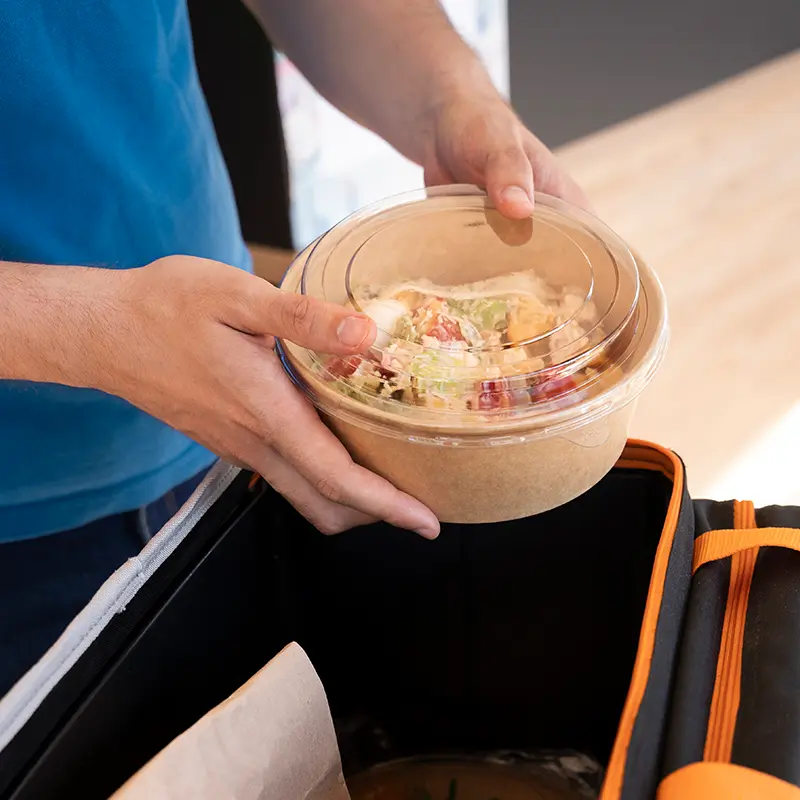
The best eco-friendly disposable food containers include bagasse clamshell boxes, kraft paper bowls, bamboo containers, and PLA-based packaging. These options are biodegradable, durable, and suitable for takeaway and delivery services.
Eco-friendly disposable food containers are packaging solutions made from sustainable, biodegradable, or compostable materials. Unlike traditional plastic, these containers break down naturally and reduce pollution.
Common types include:
- Compostable containers
- Biodegradable takeaway boxes
- Recyclable food packaging
Eco-friendly disposable food containers help reduce landfill waste and ocean pollution. Traditional plastic takes hundreds of years to decompose, making sustainable alternatives a better choice for long-term environmental protection.
Customers are more likely to support businesses that use eco-friendly disposable food containers. This builds trust, improves brand image, and increases customer loyalty.
Many governments are banning single-use plastics, making it important for food businesses to switch to sustainable packaging solutions early.
Although eco-friendly disposable food containers may have a higher initial cost, they can reduce waste management expenses and improve long-term profitability.
Bagasse (sugarcane fiber) is one of the most popular materials used in eco-friendly disposable food containers. It is 100% compostable, microwave-safe, and highly durable.
Bamboo is another excellent option. It is fast-growing, renewable, strong, lightweight, and naturally biodegradable.
PLA (polylactic acid) is a plant-based plastic alternative commonly used for lids and cold food packaging. It is industrially compostable and reduces reliance on fossil fuels.
Recycled paper and cardboard are widely available, cost-effective, and suitable for takeaway packaging, making them a practical choice for many businesses.
Choosing the right eco-friendly disposable food containers depends on several factors. First, consider the type of food you serve, whether hot, cold, liquid, or dry. Different foods require different packaging materials.
Second, ensure durability. Containers should be leak-proof, sturdy, and able to maintain food quality during delivery.
Third, evaluate cost efficiency. Balance affordability with sustainability to maintain profit margins.
Fourth, consider branding options. Custom-printed packaging helps increase brand visibility and customer recognition.
Also read: Top 10 Disposable Food Containers for Food Businesses
Learn more: Takeaway Packaging Solutions for Modern Food Businesses
Smart packaging is becoming a major trend, with QR codes providing recycling instructions and product information. Edible packaging is another innovation that aims to eliminate waste completely.
Minimalist packaging designs are gaining popularity due to their clean, functional, and aesthetic appeal. At the same time, new sustainable materials like algae-based and mushroom-based packaging are emerging in the market.
One of the main challenges of eco-friendly disposable food containers is the higher initial cost. Additionally, some businesses face limited supplier options and lack of customer awareness.
These challenges can be solved by partnering with reliable suppliers, educating customers about proper disposal methods, and gradually adopting sustainable packaging strategies.
Are eco-friendly disposable food containers really compostable?
Yes, most are compostable under industrial or home conditions depending on the material used.
Are they safe for hot food?
Yes, materials like bagasse and bamboo are heat-resistant and safe for hot food packaging.
Do they cost more?
Initially, eco-friendly disposable food containers may cost more, but they offer long-term savings and improved brand value.
Eco-friendly disposable food containers are no longer optional—they are essential for future-ready food businesses. By adopting sustainable packaging, businesses can reduce environmental impact while building stronger customer trust and long-term growth.